
AI Accounting Ethics: Practical Privacy Issues Explained
Introduction
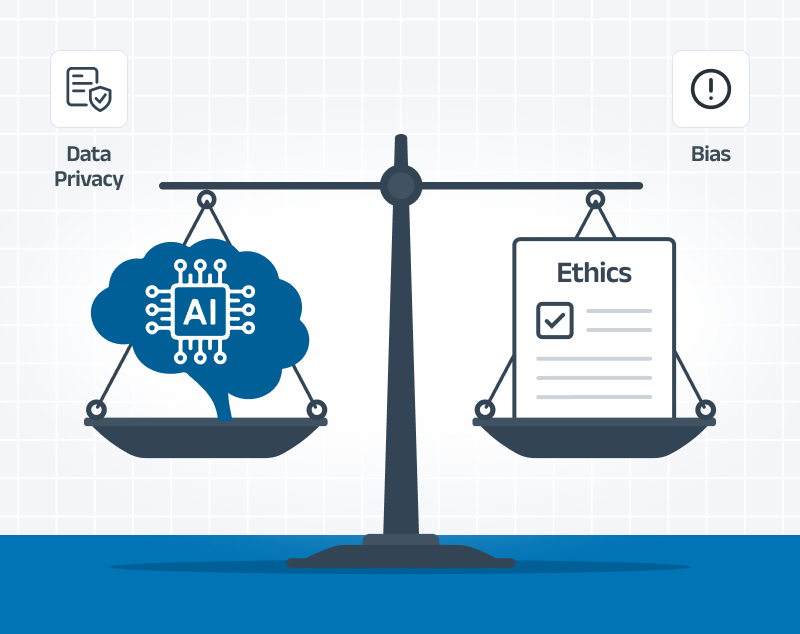
AI accounting ethics is becoming a central concern for accounting firms as artificial intelligence tools move into everyday workflows. From document analysis to automated reporting, AI systems now handle large volumes of sensitive financial data. While these tools improve efficiency, they also raise important questions about privacy, responsibility, and professional judgment. Understanding AI accounting ethics helps firms adopt AI safely without compromising client trust or regulatory compliance.
For a broader look at how automation is reshaping financial workflows, see our guide on AI in accounting for small business growth.
Why AI Accounting Ethics Matters in Modern Accounting
AI accounting ethics matters because accounting data is among the most sensitive information a business can hold. Tax records, payroll details, and financial forecasts all require strict confidentiality. When AI tools process this data, accountants remain responsible for how that information is collected, stored, and used.
Without clear ethical boundaries, AI adoption can expose firms to data leaks, compliance failures, or reputational damage. Focusing on AI accounting ethics ensures that technology supports professional standards rather than undermining them.
Many of these ethical considerations become more visible as firms expand their use of automation, which we explore in detail in AI in accounting for small business growth.
AI Accounting Ethics and Client Data Privacy
One of the most immediate concerns in AI accounting ethics is client data privacy. Many AI accounting tools rely on cloud-based systems that store and process information outside the firm’s direct control. This raises questions about who can access the data and how long it is retained.
Accountants must verify:
- Where client data is stored
- Whether data is used for AI training
- How access permissions are managed
Clear privacy policies and transparent communication with clients are essential parts of ethical AI use.
AI Accounting Ethics in Data Storage and Security
AI accounting ethics also extends to data security. AI systems often integrate with multiple platforms, increasing the number of potential access points. Each integration introduces new security risks if not managed carefully.
Ethical AI practices include:
- Using encrypted data storage
- Limiting AI access to necessary information only
- Regularly reviewing vendor security certifications
Strong security measures are not optional; they are a core requirement of AI accounting ethics.
AI Accounting Ethics and Regulatory Compliance
Compliance plays a major role in accounting ethics, especially in regions governed by strict data protection laws. Regulations such as GDPR, PIPEDA, or other local privacy frameworks apply even when AI tools are involved.
Accountants must ensure that AI systems:
- Follow existing data protection laws
- Allow data deletion when required
- Support audit trails and documentation
Relying on AI does not reduce legal responsibility. Ethical compliance remains firmly in the hands of the accounting professional.
Professional accounting bodies emphasize that ethical responsibility and data protection remain with the accountant, even when AI tools are involved, as outlined in guidance from CPA Canada.
AI Accounting Ethics and Professional Judgment
Another overlooked aspect of accounting ethics is overreliance on automation. AI tools can highlight trends or flag anomalies, but they should never replace professional judgment.
Ethical use of AI means:
- Reviewing AI-generated outputs
- Questioning unusual recommendations
- Maintaining human oversight in decision-making
AI supports accountants, but accountability always stays with the professional.
Practical Steps to Apply AI Accounting Ethics in Your Firm
Putting AI accounting ethics into practice does not require complex frameworks. Small, consistent steps make a real difference:
- Choose AI tools with clear privacy policies
- Limit data sharing to essential functions
- Train staff on ethical AI usage
- Review AI processes regularly
By embedding ethics into daily workflows, firms can benefit from AI without increasing risk.
Conclusion
AI accounting ethics is not about avoiding technology—it is about using it responsibly. As AI becomes more common in accounting, privacy, security, and professional judgment must remain top priorities. Firms that take accounting ethics seriously will protect client trust, meet compliance requirements, and build sustainable AI-driven workflows that align with the values of the profession.
Leave a Reply